
truecrime
Esteban Carpio: The Police Beating Claim After a Detective's Murder
Man k*lls a detective, then shows up to his own trial with his face smashed in while police deny touching him
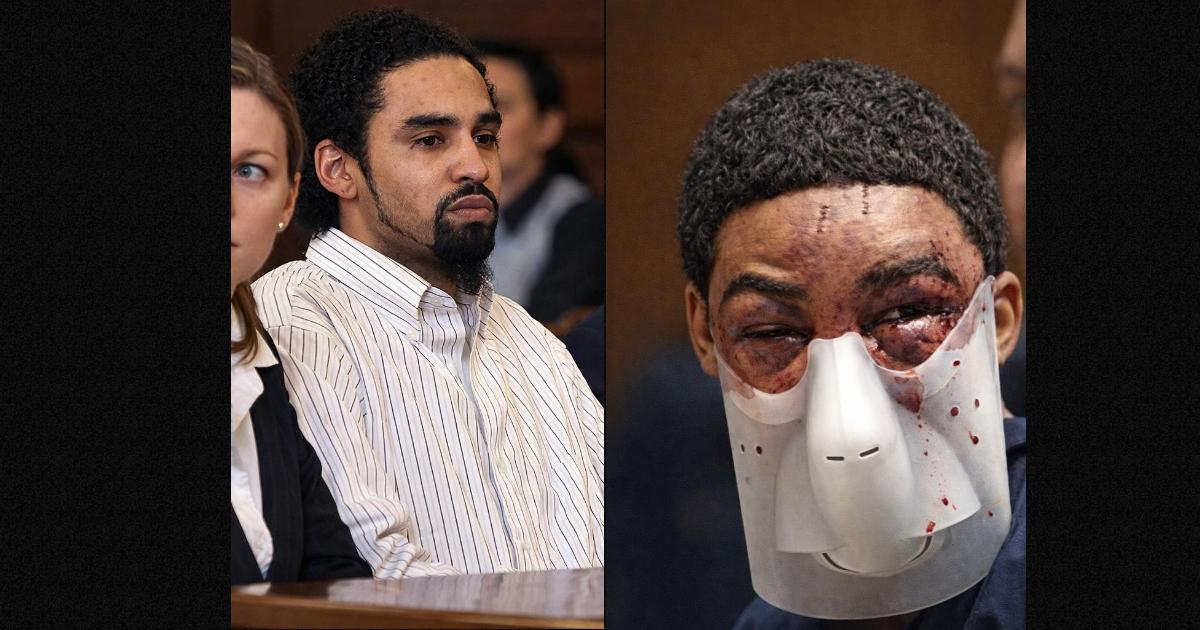
Esteban Carpio shot and killed Providence Police Detective Sergeant James L. Allen inside police headquarters. Not on the street. Not during an arrest. Inside the building where Allen worked, during an interrogation about the stabbing of an 84-year-old woman named Madeline Gatta. Carpio grabbed Allen's own weapon and used it. Then he jumped from a third-floor window and ran.
He was caught. He was charged. And when he walked into a Providence courtroom the following day, his face told a story that split the room in half.
What the Courtroom Saw
Carpio appeared wearing a plastic mask. Beneath it: stitches on his head, deep cuts across his face, and his left eye swollen completely shut. Authorities released photographs that confirmed the extent of his injuries. Whatever had happened to him after the jump, the damage was severe and visible.
His mother and a second woman wailed when they saw him. One of them cried out "Oh my God, look what they did to him" before officers physically removed both women from the courtroom while they screamed about a cover-up and police brutality. His aunt told reporters standing outside: "He needed help, and we couldn't get it, and we tried and tried. He didn't deserve this. He's a victim just as much as anybody else in this."
The New England NAACP called for a formal investigation, stating that the visible trauma on Carpio's face was inconsistent with police accounts of a simple jump and foot chase.
What Police Said Happened
Providence Police Chief Dean M. Esserman stated that Carpio's injuries resulted from the jump itself. A man hitting the ground after a three-story fall sustains serious damage. That was the official position.
But Rhode Island State Police Officer Christopher Zarrella told a different part of the story under oath. He testified that he struck Carpio with a closed fist, in and about the face and head, three times. He did not deny it. His explanation was the reason that changes the entire frame of the case: at the time, Zarrella testified, he believed Carpio had just shot a police officer and was still armed and dangerous. In his account, Carpio was actively kicking and punching officers when the strikes occurred.
That admission is what the family's claims ran directly into. The beating was not fully denied. It was justified by the circumstances surrounding it.
The Investigation and Its Findings
The FBI took the allegations seriously enough to conduct a monthlong review. Special agents interviewed more than a dozen civilian witnesses. The investigation concluded that Providence officers had not used excessive force and found no civil rights violations. The FBI determined that the most significant portion of Carpio's injuries came from the high-impact window jump, not from unwarranted police action.
A Howard University student who followed the case captured the tension many felt at the time: he said he initially had no sympathy for Carpio because he had murdered Allen. But after seeing the photographs, he said: "Now, I'm starting to think that even though he is a criminal, this is not acceptable and he shouldn't be treated in such an inhuman fashion."
Carpio himself later recalled fighting with an officer who punched and kicked him. He also remembered jumping out the window. His own memory placed both things in the same sequence.
The Verdict
A jury found Esteban Carpio guilty of the murder of Detective Sergeant James Allen and the stabbing of Madeline Gatta. His insanity defense was rejected. He was sentenced to life in prison without the possibility of parole.
James Allen's family buried a decorated detective who was killed in his own headquarters. Madeline Gatta survived her stabbing. The FBI closed its investigation with no charges filed against any officer. And Carpio has been in prison ever since, serving a sentence with no end date attached to it.